SY.
Back to Research Experience
Manuscript · Submitted
From Signal to Action: The NOD-ACT Framework for Operationalizing New-Onset Diabetes as an Artificial Intelligence-Guided Early-Detection Pathway for Pancreatic Ductal Adenocarcinoma: A Translational Review and Critical Appraisal
Yeng, T. N., Vendoor, A., Kuubabongnaa, N., Degbey, A. P., & Yeng, S.
Cancer Reports · 2026
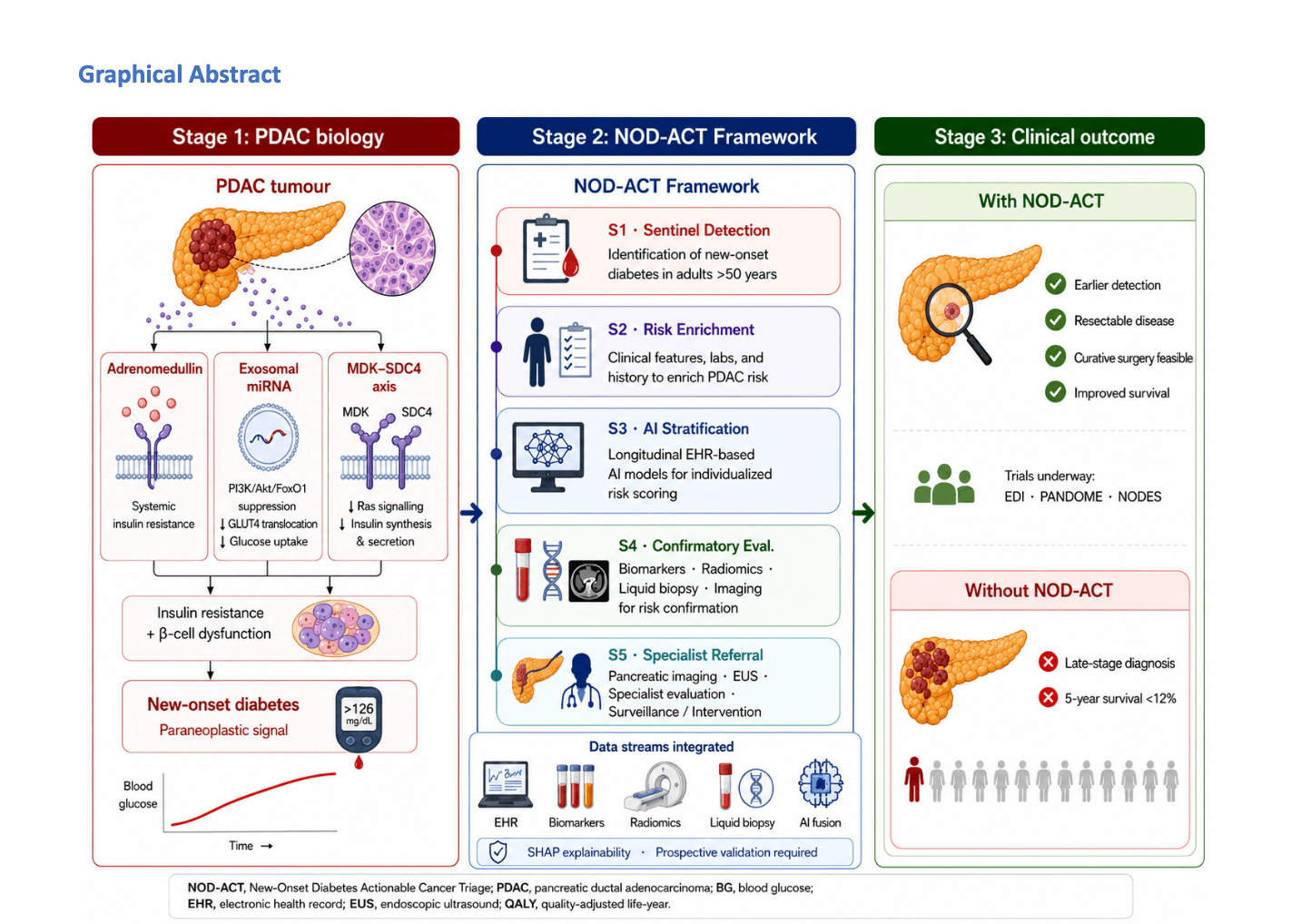
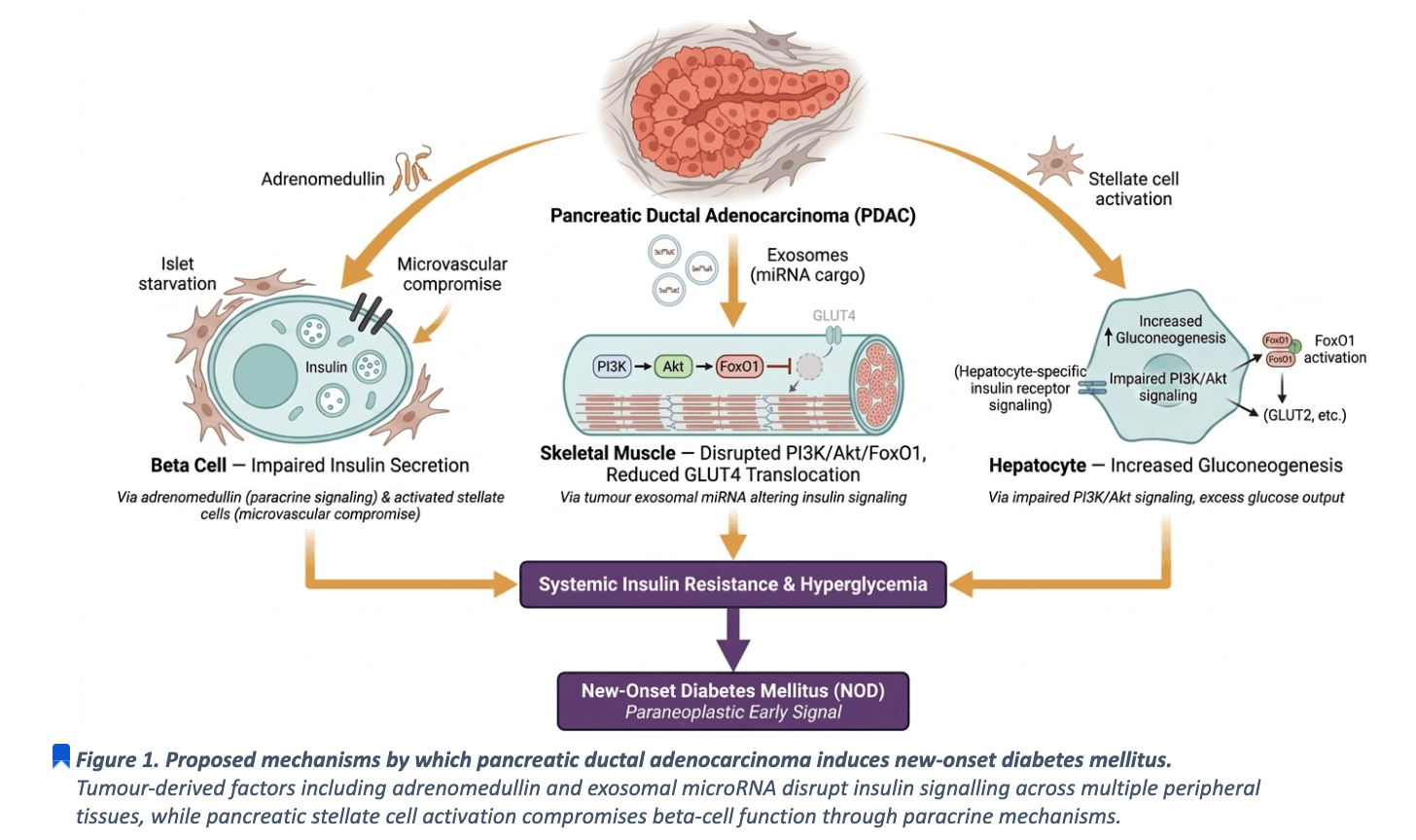
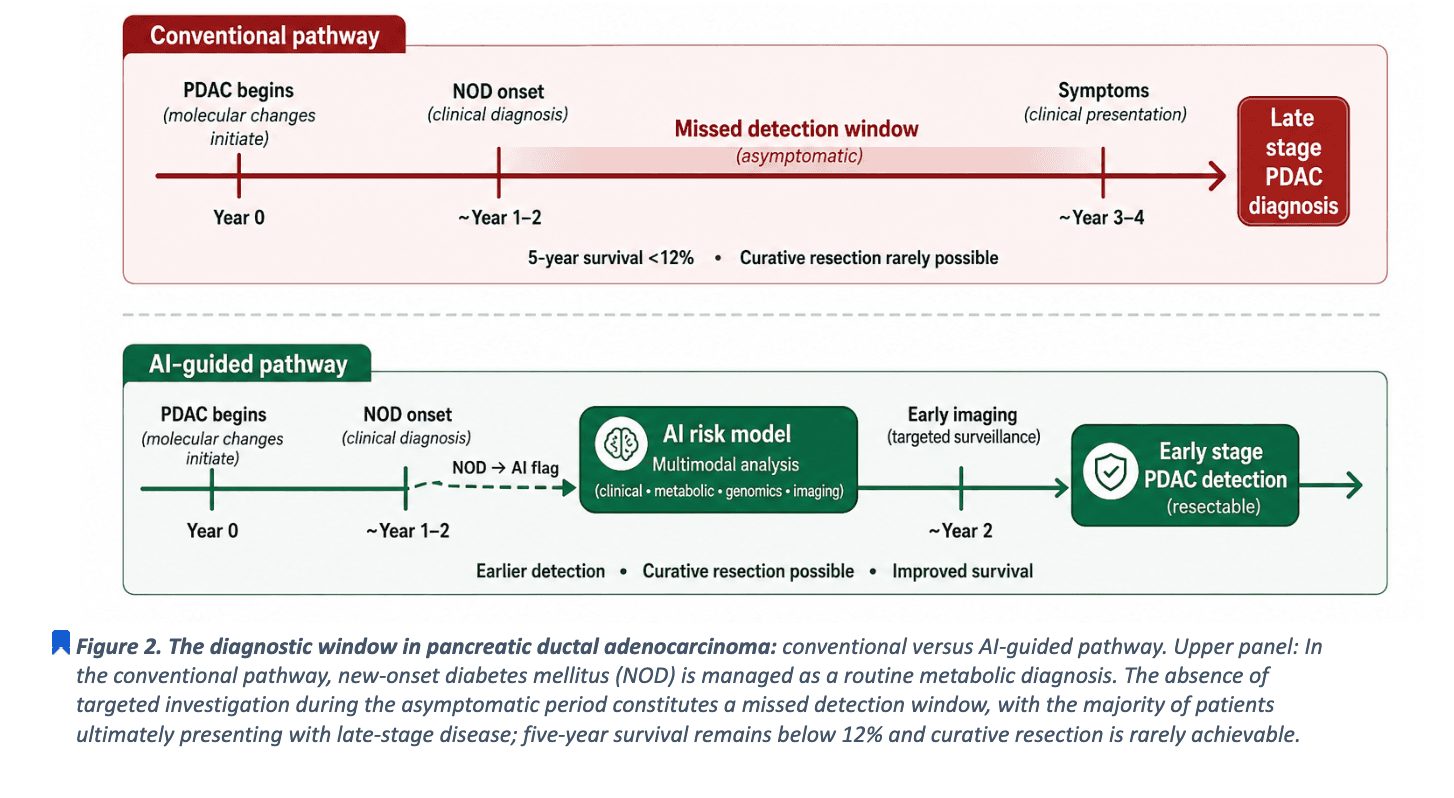
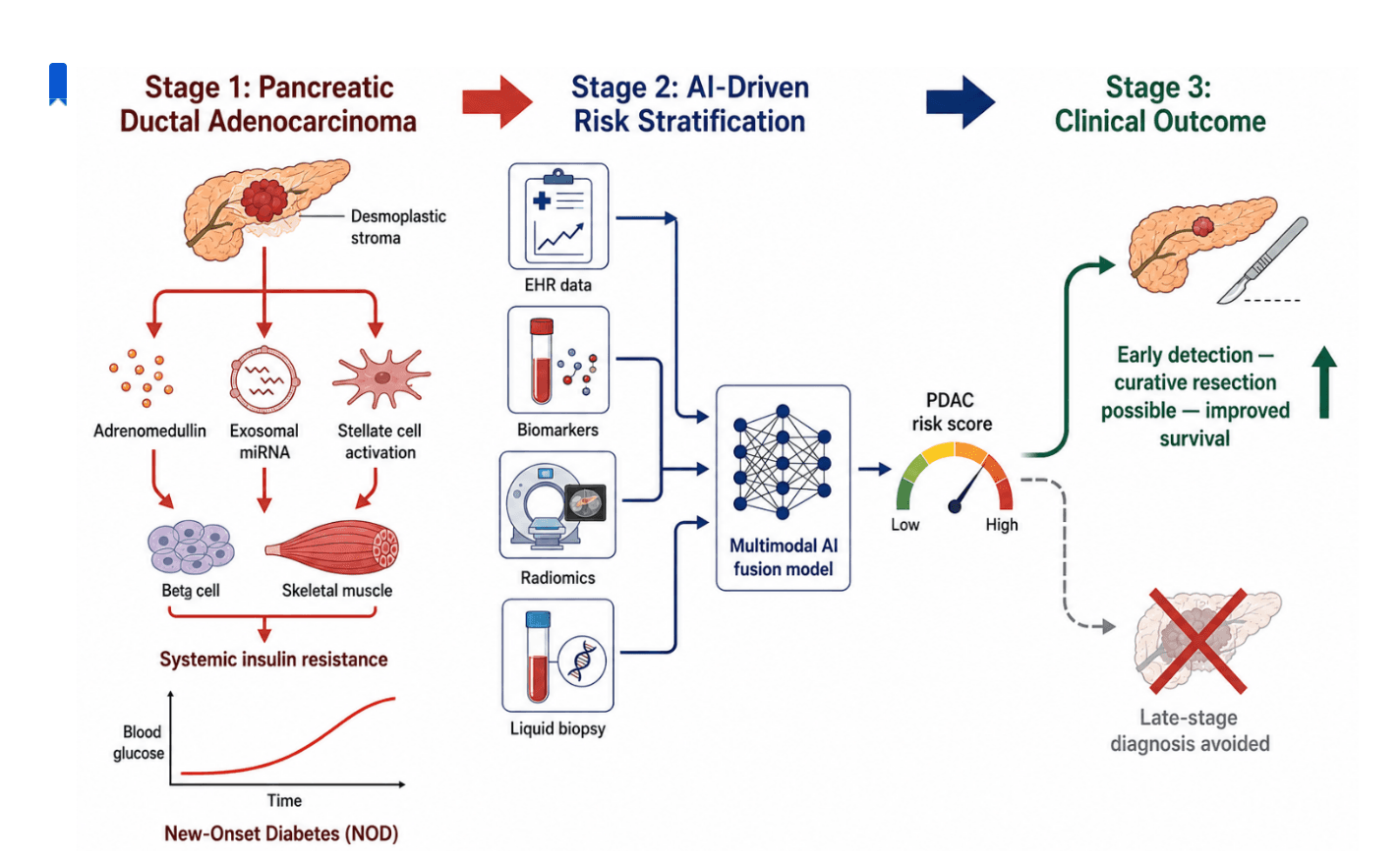
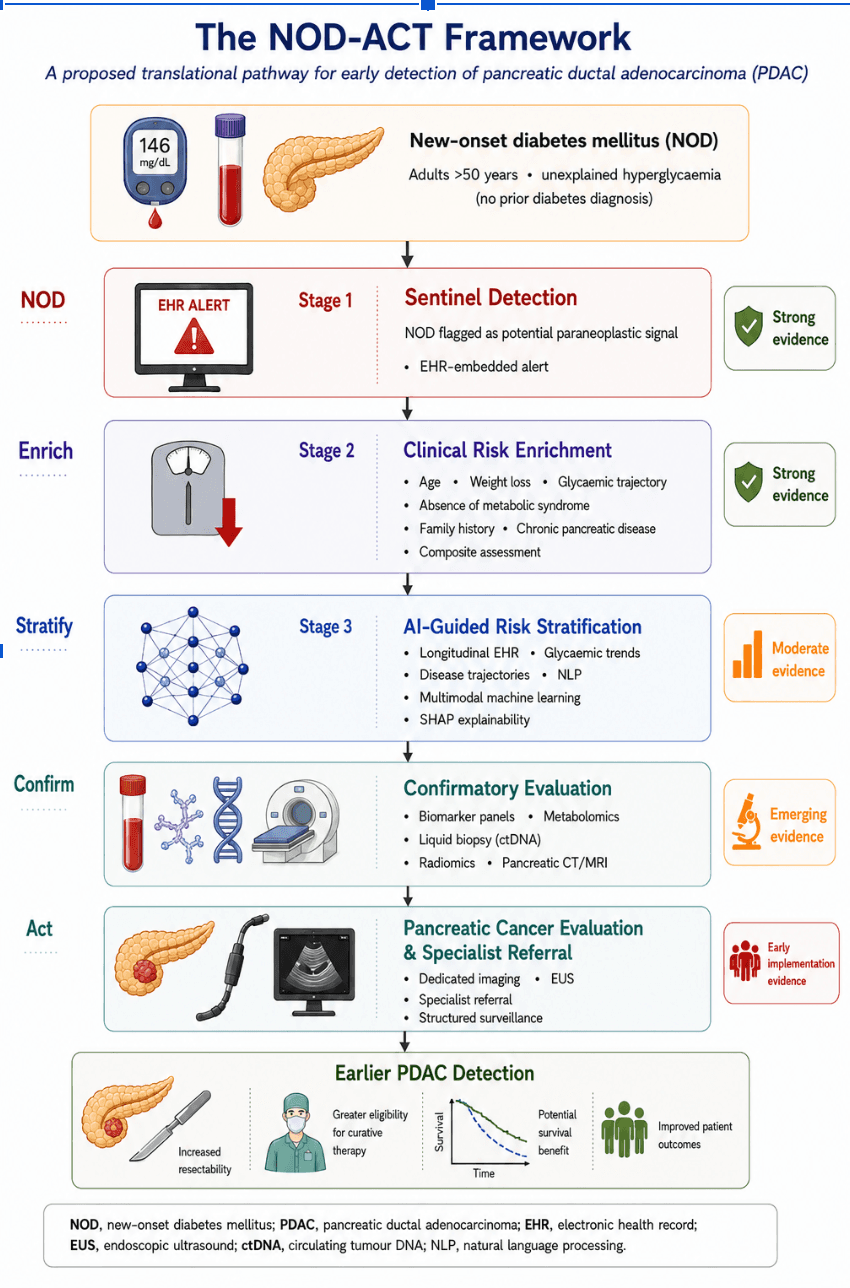
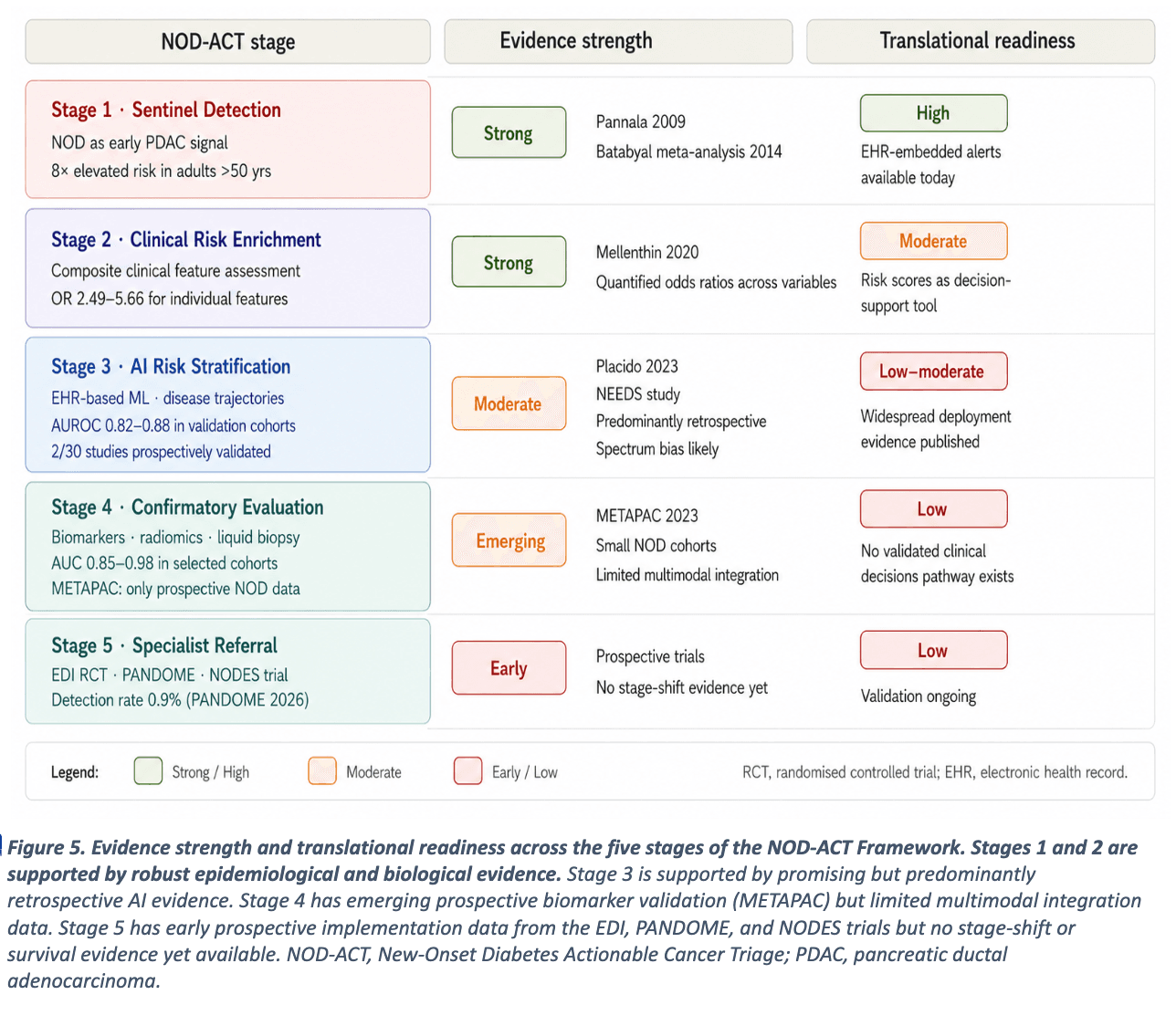
Fig. 1. Graphical abstract. From PDAC biology, through the five NOD-ACT stages and the data streams they integrate, to the clinical outcome with and without the framework.
Overview
A translational review proposing the NOD-ACT (New-Onset Diabetes Actionable Cancer Triage) Framework: a five-stage pathway that turns new-onset diabetes in adults over 50 into an AI-guided opportunity to detect pancreatic ductal adenocarcinoma while it is still resectable.
Key Points
- Reframes new-onset diabetes in adults over 50 from a routine metabolic diagnosis into a paraneoplastic early-warning signal of occult PDAC.
- Synthesises tumour-driven mechanisms (adrenomedullin-mediated beta-cell dysfunction, exosome-driven insulin resistance, desmoplasia-associated islet injury, and the MDK-SDC4 axis) that make PDAC-associated diabetes biologically distinct from type 2 diabetes.
- Proposes the five-stage NOD-ACT Framework: Sentinel Detection, Clinical Risk Enrichment, AI-Guided Risk Stratification, Confirmatory Evaluation, and Specialist Referral.
- Reviews AI across longitudinal EHR data, biomarker panels, radiomics, and liquid biopsy, finding that multimodal fusion consistently outperforms any single modality.
- Critically appraises the evidence: most studies are retrospective and geographically concentrated, so the framework is positioned as a research agenda requiring prospective validation (EDI, PANDOME, NODES) and equity-focused evaluation.
Abstract
Pancreatic ductal adenocarcinoma (PDAC) remains one of the deadliest solid malignancies, largely because it is usually diagnosed after symptoms emerge and curative treatment is no longer feasible. New-onset diabetes (NOD) in adults older than 50 years, particularly in the absence of classical metabolic risk factors, represents a clinically accessible paraneoplastic signal of occult PDAC and may provide a narrow but actionable window for earlier detection. The challenge is therefore not simply recognizing the association between NOD and PDAC, but operationalizing that association in routine practice. This translational review synthesises evidence supporting NOD as an early warning signal, critically appraises the conceptual, methodological, translational, equity, and operational limitations of the current literature, and proposes the NOD-ACT (New-Onset Diabetes Actionable Cancer Triage) Framework as a structured pathway for future PDAC detection strategies. NOD-ACT comprises five sequential stages: sentinel detection, clinical risk enrichment, AI-guided risk stratification, confirmatory evaluation using biomarkers and imaging, and pancreatic cancer evaluation with specialist referral. We review longitudinal electronic health record-based prediction, biomarker panels, radiomics, liquid biopsy approaches, and multimodal AI fusion, showing that each contributes a complementary layer of risk refinement. However, no single modality is sufficient alone, and most studies remain retrospective, geographically concentrated, and insufficiently validated for clinical deployment. The NOD-ACT Framework is therefore presented not as a clinical standard, but as a translational roadmap requiring prospective validation, implementation studies, and equity-focused evaluation before routine use.
My Contribution
Investigation, software, resources, project administration, and writing (review and editing).